 As you navigate the ups and downs of owning and running your business, you’ll find that though almost nothing is certain, many things do emerge as patterns we can recognize and improve upon.
One of those things is the 5-year ceiling: it’s this idea that after 5 years, an obstacle emerges that challenges your ability to grow as a company. Trust me: growth is never a straight upward curve, and you will hit this ceiling.
When that happens, there are 5 ways EOS recommends you work to break through that ceiling. I’ll be discussing all 5 here on my blog in the coming weeks, but today we’ll start with #1: simplicity.
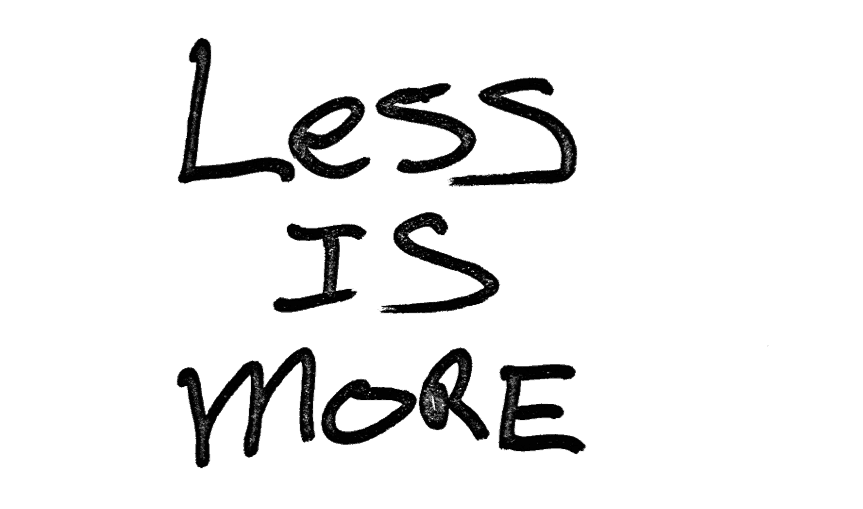
When you start your business, the system that creates revenue is likely fairly simple. There’s you and maybe another partner or two. As the business grows, more parts necessarily become part of that system in order to help it thrive and grow. That means more partners, employees, suppliers, and clients.
CONVOLUTED COMMUNICATION KILLS BUSINESSES!
The system that supports your business has grown incrementally, and for many of us, imperceptibly more complicated over time. The more points that have to be connected, the weaker those bonds can become and the more strained communication between certain points will be.
As a way to think about this phenomenon visually, have a look at these simple drawings I’ve done below:
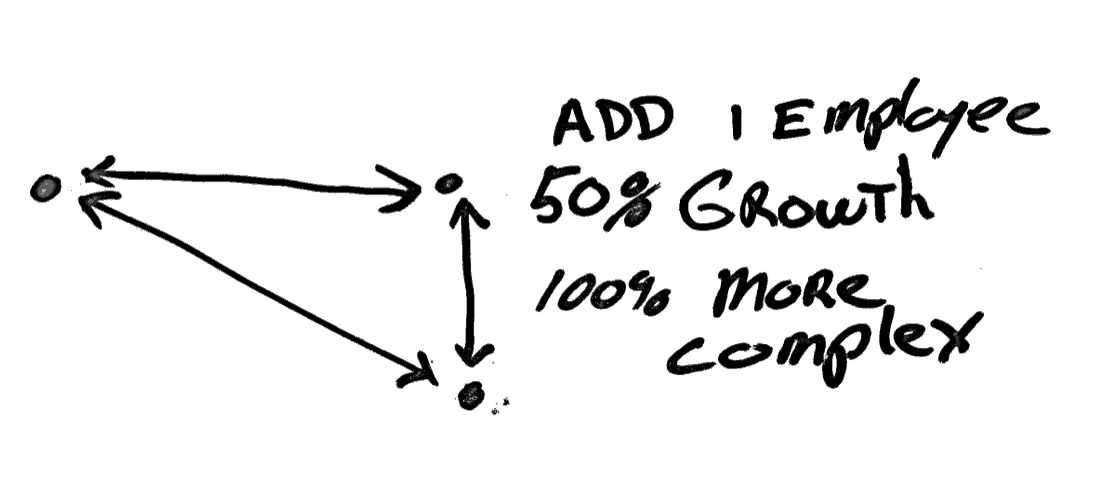
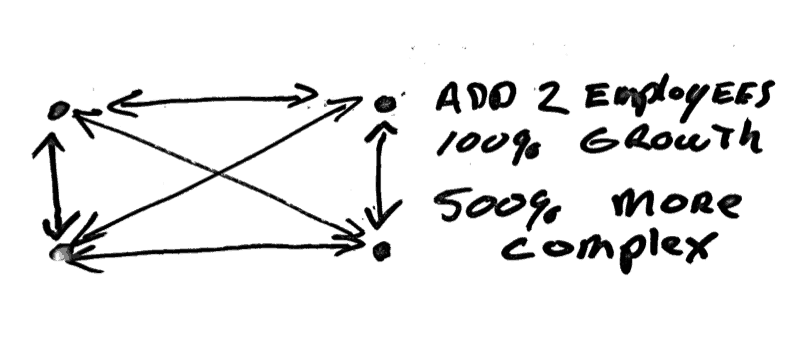
Though I’m admittedly no Picasso, I hope you can see how, while not necessarily every bond will become weaker, the more complicated a system gets, the higher the chances are of communication becoming fragmented and important tasks falling by the wayside.
When you add 1 employee, the communication becomes 100% more complex. When you add 2, the communication becomes 500% more complex. So you can see why you so often hear about businesses having problems with expanding too much too fast. Again, less is more.
The first of the five things you should try to break through your business’s 5-year ceiling is to simplify. It’s time to take a look at your personnel and processes and ask yourself some hard questions. What can I do to become more lean? To streamline? To make this make more sense to all involved?
Check back soon to read about tool #2 for breaking through your 5-year ceiling. Or if you’d like to learn more about EOS implementation with me, reach out to me directly at kk@socialmediacontractors.com.
—
photo credit: Renzo Piano’s Modern Wing (Chicago, IL) via photopin (license)